He is from
Brazil, Poland, Florence.
Sometimes
he is from Mexico, and I
say: so is
my nephew’s fiancée.
In Auckland
the taxi driver who lives in
Henderson
is from Afghanistan. There are
forty of
them there, he says. They love it, but
they have to make their own bread.
they have to make their own bread.
In New York
the taxi driver is from Pakistan.
He asks me
where I’m from, and wants to
talk
cricket. His dream, he says, is to live
with his
brother in Bradford.
In Auckland
the dentist is from Brazil. In
Sheffield
the café owner is from Auckland.
In London
our waiter is from Glasgow.
In Glasgow
our waiter is from Melbourne, like
my doctor
in Iowa City, the nose specialist,
who leans
over me on the operating table.
Where are
you from, he asks me.
I tell him
Auckland. Good on ya, he says.
Sometimes
in Auckland the taxi driver is
from
Auckland. He is not from anywhere
but there.
If he’s old enough, I tell him my
dream,
bringing back the trams.
Thanks to Paula Morris whose poem
is posted with her permission
Editor Renee Liang
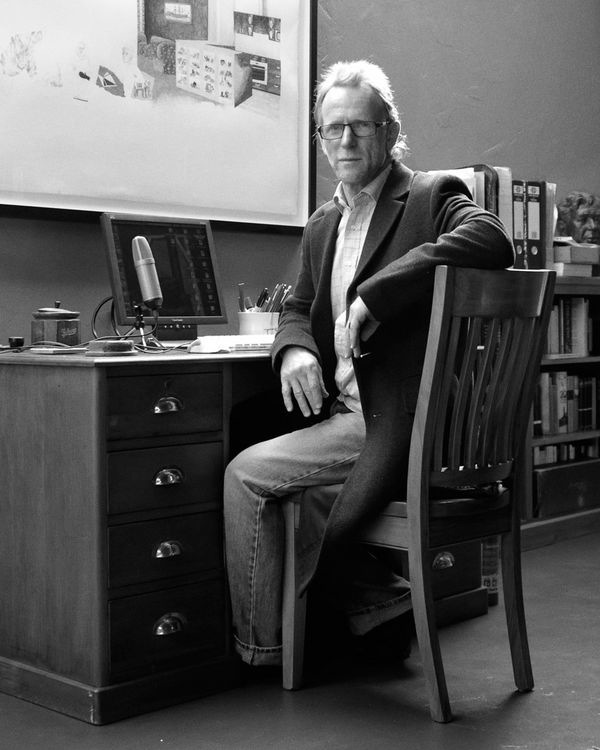
Paula Morris is a fiction writer of English and Maori descent. Born in Auckland, New Zealand, she's studied and worked in a number of places - York, Manchester, London, New York, Wellington, Iowa City, New Orleans, Glasgow - and is currently Fiction Writer-in-Residence at the University of Sheffield.
Her most recent novel, Rangatira, won the fiction categories of the 2012 New Zealand Post Book Awards and the Nga Kupu Ora Maori Book Awards, and was published in German in 2012 by Walde+Graf. Her short story collection, Forbidden Cities, was a regional finalist in the 2009 Commonwealth Prize. She's also the author of YA mystery novels set in haunted cities around the world (published by Scholastic US) and a forthcoming children's book, Hene and the Burning Harbour.
Paula is well-known here as a fiction writer, but I’ve also long admired her insightful and intelligent literary interviewing, on show most years at the Auckland Writer’s and Reader’s Festival. It was on her trip home for this that I persuaded her to teach on a writing course for migrant women I run, New Kiwi Women Write Their Stories. This is a four-week ‘fast and furious’ tour through poetry, fiction, editing and performance, and the women are invited to contribute to an anthology at the end, launched (with afternoon tea of course!) as the finale.
A number of well-known writers have been tutors, and they are invited to be in the anthology too. Imagine my pleasure and surprise when Paula sent me the poem above. This poem, which starts with the familiar phrase (to many) “Where are you from,” is packed full of witty detail: the taxi driver who talks about making bread, the nose specialist in Iowa who uses the iconic Australian phrase, “Good on ya.” But the apparently random list is in fact carefully constructed. Everyone, it seems, is from somewhere else. Everyone has multiple allegiances, multiple identities.
In Paula’s poem, the speaker starts by asking the question, but then is in turn asked as she moves around the world. This is a scenario common to us nomadic Kiwis. In fact the answer to that question, “Where are you from,” might well be, “It depends on where I am.” The last verse of Paula’s poem suggests, however, that not all of us are comfortable with the notion of shifting geographies: “He is not from anywhere/but there.”
One of the things I enjoy most about this poem is its cheerful delight, the innocent curiosity with which the question is asked. In the world of the poem, asking where someone is from is a way of connecting. It leads to further opening up and maybe even a exchange: cricket, a dream of trams. I’m going to succumb to temptation and offer a poem I wrote in 2006, ‘From Where’. This is an altogether darker poem, sparked when a camera-toting man stopped me as I was walking in the Auckland Domain (my home turf since student days). To some of us born in NZ, the question “Where are you from,” seems to carry an insinuation of “you don’t belong.” It’s an often daily reminder that we ‘look different’. And yet the way the question is asked (very kindly) means we can’t respond with anything other than polite, as-vague-as-we-can-make-it, murmurings. (Which I did, then went home and wrote this poem.)
I’d love to say that seven years later there is no longer any need to write poems like this; unfortunately I still get asked the same question, and I still feel like I’m being questioned on my right to live at home! My reaction changes, however, as soon as I travel. I find it intriguing that Paula and I responded so differently to the same question. Below, her answers to some questions I sent her; and then, my poem.
What sparked this poem?
I guess the spark for the poem was my incredible nosiness about where people are from; I'm always asking everyone, including shop assistants and receptionists and people I meet on the tram. (They have trams in Sheffield!) I think I can get away with it, because I'm 'foreign' as well - even in New Zealand, because I don't live there. The material seemed to lend itself to a poem because of its compressed form, so I could play with the juxtapositions a bit. Also, the compression of a poem works because often I get little more than a name of a place from someone: these are often announcements rather than discussions, like the one on the operating table in Iowa!
You're more commonly known as a prose writer, but the confidence of this poem suggests you write poetry quite often. Are you a closet poet?
Yes, I'm a poet on the sly. The very sly, as I don't have much confidence in my poetry. I still sound like a prose writer, I think. Often I write in syllabic meter to try to constrain my lines more, or to demand more of the word choices. I like the playfulness that's possible in a poem, and also the chance to write about things I see/experience directly, which I can't do in my fiction. 'Where' is the first poem I've had published as an adult, you know, apart from a parodic villanelle (called 'Billanelle') written for Bill Manhire's 60th-birthday book. My very first publication as a child was a poem in the primary school magazine. It was about Guy Fawkes. It began 'Guy Fawkes was an Englishman/He though the government was wrong' and ended with 'And they hanged him.' That's all I remember. Clearly I was a prose writer even back then, and obsessed with history ...
How do you choose what to write about?
I don't think I choose what to write, exactly, whatever I'm doing. Something comes bubbling up, and won't go away. Sometimes it's a case of a connection or intersections, a few things coming together. A while ago I visited the ruins of Pontefract Castle, where Richard II was killed, and I was thinking about it for a while. Then there was a bad car accident nearby that made national news here in the UK, and it seemed as though these two things were related, tangentially. Place is always important in my fiction, and clearly the interest translates.
From where
by Renee Liang
where are you from
she asked
licking fat cream from the tips
of perfect manicures
and I said
actually I live just around the corner.
no really she said
looking in her handbag for lip gloss
where are you from
and I said
from here
as if I didn’t know what she meant
the first time.
From here?
she said
one perfect eyebrow raised
as if she wanted to redo her eyeliner
and I said
quickly
yes
and I knew
the next question.
oh she said
oh where are your parents from then
and I wanted to say
Disneyland
but I knew she wouldn’t believe me
so I said
China
and I could see her summing me up
origami eyelids
golded skin
straight black hair
flat chest
I could see her
breathing in
in relief.
is posted with her permission
Editor Renee Liang
Paula Morris is a fiction writer of English and Maori descent. Born in Auckland, New Zealand, she's studied and worked in a number of places - York, Manchester, London, New York, Wellington, Iowa City, New Orleans, Glasgow - and is currently Fiction Writer-in-Residence at the University of Sheffield.
Her most recent novel, Rangatira, won the fiction categories of the 2012 New Zealand Post Book Awards and the Nga Kupu Ora Maori Book Awards, and was published in German in 2012 by Walde+Graf. Her short story collection, Forbidden Cities, was a regional finalist in the 2009 Commonwealth Prize. She's also the author of YA mystery novels set in haunted cities around the world (published by Scholastic US) and a forthcoming children's book, Hene and the Burning Harbour.
Paula is well-known here as a fiction writer, but I’ve also long admired her insightful and intelligent literary interviewing, on show most years at the Auckland Writer’s and Reader’s Festival. It was on her trip home for this that I persuaded her to teach on a writing course for migrant women I run, New Kiwi Women Write Their Stories. This is a four-week ‘fast and furious’ tour through poetry, fiction, editing and performance, and the women are invited to contribute to an anthology at the end, launched (with afternoon tea of course!) as the finale.
A number of well-known writers have been tutors, and they are invited to be in the anthology too. Imagine my pleasure and surprise when Paula sent me the poem above. This poem, which starts with the familiar phrase (to many) “Where are you from,” is packed full of witty detail: the taxi driver who talks about making bread, the nose specialist in Iowa who uses the iconic Australian phrase, “Good on ya.” But the apparently random list is in fact carefully constructed. Everyone, it seems, is from somewhere else. Everyone has multiple allegiances, multiple identities.
In Paula’s poem, the speaker starts by asking the question, but then is in turn asked as she moves around the world. This is a scenario common to us nomadic Kiwis. In fact the answer to that question, “Where are you from,” might well be, “It depends on where I am.” The last verse of Paula’s poem suggests, however, that not all of us are comfortable with the notion of shifting geographies: “He is not from anywhere/but there.”
One of the things I enjoy most about this poem is its cheerful delight, the innocent curiosity with which the question is asked. In the world of the poem, asking where someone is from is a way of connecting. It leads to further opening up and maybe even a exchange: cricket, a dream of trams. I’m going to succumb to temptation and offer a poem I wrote in 2006, ‘From Where’. This is an altogether darker poem, sparked when a camera-toting man stopped me as I was walking in the Auckland Domain (my home turf since student days). To some of us born in NZ, the question “Where are you from,” seems to carry an insinuation of “you don’t belong.” It’s an often daily reminder that we ‘look different’. And yet the way the question is asked (very kindly) means we can’t respond with anything other than polite, as-vague-as-we-can-make-it, murmurings. (Which I did, then went home and wrote this poem.)
I’d love to say that seven years later there is no longer any need to write poems like this; unfortunately I still get asked the same question, and I still feel like I’m being questioned on my right to live at home! My reaction changes, however, as soon as I travel. I find it intriguing that Paula and I responded so differently to the same question. Below, her answers to some questions I sent her; and then, my poem.
What sparked this poem?
I guess the spark for the poem was my incredible nosiness about where people are from; I'm always asking everyone, including shop assistants and receptionists and people I meet on the tram. (They have trams in Sheffield!) I think I can get away with it, because I'm 'foreign' as well - even in New Zealand, because I don't live there. The material seemed to lend itself to a poem because of its compressed form, so I could play with the juxtapositions a bit. Also, the compression of a poem works because often I get little more than a name of a place from someone: these are often announcements rather than discussions, like the one on the operating table in Iowa!
You're more commonly known as a prose writer, but the confidence of this poem suggests you write poetry quite often. Are you a closet poet?
Yes, I'm a poet on the sly. The very sly, as I don't have much confidence in my poetry. I still sound like a prose writer, I think. Often I write in syllabic meter to try to constrain my lines more, or to demand more of the word choices. I like the playfulness that's possible in a poem, and also the chance to write about things I see/experience directly, which I can't do in my fiction. 'Where' is the first poem I've had published as an adult, you know, apart from a parodic villanelle (called 'Billanelle') written for Bill Manhire's 60th-birthday book. My very first publication as a child was a poem in the primary school magazine. It was about Guy Fawkes. It began 'Guy Fawkes was an Englishman/He though the government was wrong' and ended with 'And they hanged him.' That's all I remember. Clearly I was a prose writer even back then, and obsessed with history ...
How do you choose what to write about?
I don't think I choose what to write, exactly, whatever I'm doing. Something comes bubbling up, and won't go away. Sometimes it's a case of a connection or intersections, a few things coming together. A while ago I visited the ruins of Pontefract Castle, where Richard II was killed, and I was thinking about it for a while. Then there was a bad car accident nearby that made national news here in the UK, and it seemed as though these two things were related, tangentially. Place is always important in my fiction, and clearly the interest translates.
From where
by Renee Liang
where are you from
she asked
licking fat cream from the tips
of perfect manicures
and I said
actually I live just around the corner.
no really she said
looking in her handbag for lip gloss
where are you from
and I said
from here
as if I didn’t know what she meant
the first time.
From here?
she said
one perfect eyebrow raised
as if she wanted to redo her eyeliner
and I said
quickly
yes
and I knew
the next question.
oh she said
oh where are your parents from then
and I wanted to say
Disneyland
but I knew she wouldn’t believe me
so I said
China
and I could see her summing me up
origami eyelids
golded skin
straight black hair
flat chest
I could see her
breathing in
in relief.
This week's editor Renee Liang, a
second-generation Chinese New Zealander, is a poet, playwright, paediatrician,
medical researcher and fiction writer. She is involved in organising community
arts events such as artistic blind-dating initiative Metonymy and Funky
Oriental Beats (FOB), a platform for Kiwi-Asian performing artists. She is
a regular contributor to The Big Idea, a website linking NZ's arts community.
Renee has been published in a number of journals and anthologies and has
produced three chapbooks of poetry: Banana, Chinglish and Cardiac
Cycle. She has written, produced and toured three plays: Lantern(2009),
The Bone Feeder (2009/2011)and The First Asian AB (2011). She is
currently working on Paper Boats, a play about the journeys of
Chinese-Kiwi women. Website: www.chinglish-renee.blogspot.com
Remember, there are lots of great poems to check out this Tuesday - look at the sidebar!
Remember, there are lots of great poems to check out this Tuesday - look at the sidebar!