Showing posts with label editor Helen Lowe. Show all posts

Tuesday, December 8, 2015

Morte D’Arthur (Partial) by Alfred, Lord Tennyson

.
So all day long the noise of battle roll’d
Among the mountains by the winter sea;
Until King Arthur’s table, man by man,
Had fallen in Lyonnesse about their Lord,
King Arthur: then, because his wound was deep,
The bold Sir Bedivere uplifted him,
Sir Bedivere, the last of all his knights,
And bore him to a chapel nigh the field,
A broken chancel with a broken cross,
That stood on a dark strait of barren land.
On one side lay the ocean, and on one
Lay a great water, and the moon was full.
…

And slowly answer’d Arthur from the barge:
“The old order changeth, yielding place to new,
And God fulfils Himself in many ways,
Lest one good custom should corrupt the world.
Comfort thyself: what comfort is in me?
I have lived my life, and that which I have done
May He within Himself make pure! but thou,
If thou shouldst never see my face again,
Pray for my soul. More things are wrought by prayer
Than this world dreams of. Wherefore, let thy voice
Rise like a fountain for me night and day.
For what are men better than sheep or goats
That nourish a blind life within the brain,
If, knowing God, they lift not hands of prayer
Both for themselves and those who call them friend?
For so the whole round earth is every way
Bound by gold chains about the feet of God.
But now farewell. I am going a long way
With these thou seëst—if indeed I go—
(For all my mind is clouded with a doubt)
To the island-valley of Avilion;
Where falls not hail, or rain, or any snow,
Nor ever wind blows loudly; but it lies
Deep-meadow’d, happy, fair with orchard-lawns
And bowery hollows crown’d with summer sea,
Where I will heal me of my grievous wound.”
.
So said he, and the barge with oar and sail
Moved from the brink, like some full-breasted swan
That, fluting a wild carol ere her death,
Ruffles her pure cold plume, and takes the flood
With swarthy webs. Long stood Sir Bedivere
Revolving many memories, till the hull
Look’d one black dot against the verge of dawn,
And on the mere the wailing died away.
.
by Alfred Lord, Tennyson, 1809-1892
.
Editor: Helen Lowe 


The Morte D’Arthur, or Death Of Arthur, is probably the most well known in Tennyson’s Idylls of the King, which draws on Sir Thomas Malory’s medieval work of the same name (Le Morte D’Arthur) as well as the Celtic Mabinogion. Because it was the first written of the Idylls poems and the last in chronological sequence, I have included the first, and also the final two stanzas today.

The  Morte D’Arthur is one of a long tradition of epic poems, from Homer’s Iliad, through the Anglo-Saxon Beowulf and Middle English Sir Gawain & The Green Knight to later works such as Milton's Paradise Lost.  Like both Sir Gawain & The Green Knight, and Malory's earlier work, Tennyson's Morte D’Arthur draws on the Arthurian legend, which was also known as  ‘The Matter Of Britain’ in the Middle Ages because of it’s subject matter.

Like its predecessors, Tennyson’s poem demonstrates the enduring influence of these ancient stories and the way in which they continue to ‘speak’ to us afresh in each new generation.  In Tennyson’s case the medium was poetry,  but I believe the influence is clearly discernible in contemporary literature, including Tolkien’s The Lord Of The Rings, Mary Stewart's The Crystal Cave, TH White's The Once and Future King, and Susan Cooper's The Dark Is Rising. As both a poet and and fantasy novelist I am honoured to be part of so grand a tradition.

As for the poem  – last mentioned but very far from least  – I feel that in terms of poetic power and language, it really speaks for itself.  To read an illuminated version of the poem from 1912, click on: Morte D’Arthur.  ~ Helen Lowe

Alfred, Lord Tennyson, 1809-1892, is one of the most well-known and enduring of the Victorian poets, his considerable body of work distinguished by an outstanding lyric gift for sound and cadence. He was the Poet Laureate of Great Britain and Ireland throughout much of his long and distinguished poetic career.

Today's editor, Helen Lowe, is a novelist, poet and interviewer whose work has been published, broadcast and anthologized in New Zealand and internationally. Her first novel, Thornspell, was published to critical praise in 2008, and her second, The Heir of Night (The Wall Of Night Series, Book One) won the Gemmell Morningstar Award 2012. The sequel, The Gathering Of The Lost, was shortlisted for the Gemmell Legend Award in 2013. Helen's fourth novel, Daughter Of Blood, (The Wall Of Night Series, Book Three) is forthcoming in January 2016. She posts regularly on her Helen Lowe on Anything, Really blog and is also active on Twitter: @helenl0we

In addition to today's feature be sure to check out the wonderful poems featured by other Tuesday Poets, using our blog roll to the left of this posting.

Tuesday, November 17, 2015

Abdullah, The Servant of God – by Wade Bishop


He was not a handsome man
not even in possession of a face that was easy to look into
it was journey twisted and wrinkled like a baby at birth
..............only his never smoothed
the folds filled with hopes and wonders, longing and dreams
lost in the creases
describing loyal lines in a resume of hard work

He laboured with energetic toil for the joy and happiness of strangers
… strangers like me that turned up at the hotel cairo
a mis-named rooftop respite from the surging life-affirming chaos that once was aleppo.

when you spoke with Him, He fixed you with a present, earnest eye
searching your face and body for the words that filled the spaces
of those He didn’t know
..............it was His right eye
because His left eye stared always left
and heavenward to some other place.

His name was Abdullah; Abdullah Abdullah
“The Servant of God The Servant of God”
His parents had made doubly sure that this should be so
and Abdullah Abdullah was true to His name
for He chose to open His heart, mind and smile wide
to those who came in to His hotel
in His city, in His beloved country
and welcome them as family

His country was full of Abdullahs – and Abdullah Abdullahs
both literally and figuratively

i met most of them on a bus along the euphrates to palmyra
… late i hadn’t paid the fare
i stepped on,
all places taken and the aisle long filled with people and piles of boxes of goods
eight Abdullahs stood to offer me their seats
..............and no-one would sit till i honoured one of them as their guest
shabbily dressed as i was compared to them

the “welcome to syria’s” like rain to desert sands
..............sso i sat as it rained

..............an Abdullah paid for my ticket
and five more passed it back to me so i could stay seated
then when we stopped for a rest yet another pressed food to my hand
to ensure i’d eaten
and still another a cold cold coke …
because the sun was beating hard on our heads ...
..............they could tell the desert sweats were new to me

then when my destination became known
somehow it flowed like the euphrates to the ear of Abdullah the bus driver
He made sure i was first out the door;
bypassing the bus station as irrelevant for the history-made edge of palmyra
to the steps of my hotel,
a short walk to the great temple of baal
.............. – now gone.

just as all these Abdullahs may now also be gone.

They may all be dead now.

and if They are all dead now – and They were right about God
and i am not 
.............. then Allah will be smiling upon Them
for They were true to His Word: to welcome strangers as brothers until they proved otherwise.

in His eyes: Ambassadors of their Faith and of simple – selfless – human kindness
He will bless Them with His hand upon Their heads hung low
as Their tears flow for Their sisters and brothers, fathers and mothers – daughters & sons

... who still run ...

.........................who still run ...

who run
from the missiles,
the bombs
and the guns

.............. who still run with the hope that we too will welcome them
as some of us were once welcomed
by their now dead fathers and brothers
...................and now dead sons.

Welcome.
Welcome.
Welcome.

© Wade Bishop

Reproduced on The Tuesday Poem with permission.

Editor: Helen Lowe 

For this week's feature, I asked Wade to share the background to his poem, Abdullah, The Servant of God, and he kindly provided the following:

"Syria was never on my "must see" list when I was traveling, but just happened to be "on the way" when I planned an overland trip from Turkey to Egypt in 1997. It was one of those rare quiet periods in the Middle East (shattered by the murder of 70 odd Scandinavian tourists at the Mortuary Temple of Hatshepsut in Egypt at the end of it, by a jihadist group based in Middle Egypt). Syria has always been sold as the "hotbed of terrorism", the home of "tea towel wearing extremists" ... I wasn't sure what to expect.

What I did find was a country more welcoming, friendly and generous than any of the 40 or so I have been fortunate to visit. This poem is based upon the absolute truth of my bus ride from Aleppo to Palmyra, which epitomised my experience there ... I have therefore found myself in tears whenever I hear the "news" about what is happening there right now. In this poem I give some small voice to the story that is rarely told of the real people who live there."

– Wade Bishop

Editor's Commentary:
I have always believed that it is not enough for poetry to be technically accomplished, it must also have "heart." Part of what it means to have "heart", in my lexicon, is that the poem will in some way illuminate an aspect of the human condition, whether at the personal or societal level. And if the art of poetry is to remain relevant, then we must have poets, and poems, that address themselves directly to the issues of the day – not in the manner of a pamphlet or a letter to the editor, but as powerful and compelling poetry. 

When I first heard Wade read Abdullah, The Servant of God at the Canterbury Poets' Collective* several weeks ago, I was struck by the extent to which the poem not only addressed a real and pressing international issue, but did so out of direct experience. The authenticity of that experience speaks from every line of the poem, from the first introduction of Abdullah, who is "not a handsome man" to the wonderful account of the bus ride from Aleppo to Palmyra where the stranger is treated as an honoured guest.

From the past, we come forward to the stark present and the poem's painful but also profound conclusion. A powerful poem, I thought, listening to it for the first time, and one that it is important to share – an opinion that did not alter when I read the poem on the page. So I asked Wade if I could feature it on The Tuesday Poem today and was delighted when he agreed.

Since then, we have been overtaken by the events of the weekend in Paris, and the bombs of the previous week in Beirut. To be honest, for a moment I wondered if this was the best time to feature Abdullah, Servant of God. Only to almost immediately realise that if I believed in the poem, in its authenticity and honesty, then there could be no better time to publish it.

In my view, Abdullah, Servant of God speaks to the heart of the times. I hope it also does the work of poetry and speaks to our hearts today. – Helen Lowe

* Abdullah, Servant of God was an Open Mic winner in the Canterbury Poets' Spring Season, which concludes tomorrow, Wednesday 18 November.


Wade Bishop: Born too late to see the Moon Landing for himself at the time, Wade made up for it by staying up too late and getting up too early until at last he was able to watch the Space Shuttle Colombia take off for the first time ever! ... And even now he is continually in awe of the vastness of space and our very small lonely place in it  –  and it is in this that he finds perspective. Wade has travelled a great deal, worked in advertising, radio, the internet, repairing earthquake damaged homes  – but returned to writing poetry and prose more seriously in the last year and is working towards his first "collection". Wade has a website for his visual and written musings at www.iammenotyou.com (Not all musings reflect the author's actual points of view though!)

Today's editor, Helen Lowe, is a novelist, poet and interviewer whose work has been published, broadcast and anthologized in New Zealand and internationally. Her first novel, Thornspell, was published to critical praise in 2008, and her second, The Heir of Night (The Wall Of Night Series, Book One) won the Gemmell Morningstar Award 2012. The sequel, The Gathering Of The Lost, was shortlisted for the Gemmell Legend Award in 2013. Helen's fourth novel, Daughter Of Blood, (The Wall Of Night Series, Book Three) is forthcoming in January 2016. She posts regularly on her Helen Lowe on Anything, Really blog and is also active on Twitter: @helenl0we

In addition to today's feature be sure to check out the wonderful poems featured by the other Tuesday Poets, using our blog roll to the left of this posting. 

Tuesday, September 8, 2015

The Fox by Bernadette Hall

The fox is a single red stroke that cuts across
the clearing. The colour seems to hang like smoke,
you can almost see where she has come from.
Her musk (though you can smell nothing)
is specific like a thumbprint on the air.
It isn’t raining but there’s a kind of wet
on your face, a stickiness of insect juices dropped.
The fox is rusty-dull, discreet, not radiant or hot
or pulsing. Not agitated. Not randy.
She is completely dream and intelligence
sliding through the wet grass, the stinging nettles,
the little brittle helmets of dry seed,
a flower or two, relics of the drizzly, petalled summer.
The lyric fox goes down to the creek
where dark and dankness will mask her scent
and the lovely rosette of her face.
She’ll be able to pause there, for a while, sip water
while the dogs swirl and bell in front of the Big House.


©  Bernadette Hall

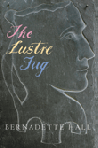
from The Lustre Jug, Victoria University Press, 2009

Reproduced on The Tuesday Poem with permission.

Editor: Helen Lowe 

This week, I thought I'd do things a little differently and invite Bernadette to speak to her poem The Fox , which in 2009 was recognised as one of the Best New Zealand Poems of 2008, selected by Robyn Marsack, Director of the Scottish Poetry Library.

"The Rathcoola Estate, where I lived for six months in 2007, is situated in Donoughmore, a rural area in Co. Cork, about twenty five minutes drive from Blarney. Among the wonders there were the blue jays that came down to steal apples from the 200 year old apple trees in the orchard. And the foxes. I’ve long been fond of them, from Brer Fox to the silver foxes of the Arctic. I was desperate to see one.


One day when I was standing under huge oak and sycamores trees just beyond the stone walls that enclosed the orchard and not far from the creek, I saw the fox. She was surprisingly close. And I did experience a kind of deepening stillness, the words clearly in my memory from Ted Hughes’ ‘The Thought Fox’ which I had taught to so many classes over the years. Ireland had this way of offering me ‘for real’ many things which literature had already embedded in my imagination.

This fox was completely unfazed by my presence in her space. She had already judged me as being of good will, or at least harmless. I was relieved to see her. That same morning the hunt had gone through the estate, tracking along the creek with a great hullabaloo, the dogs and the men all in a frenzy. I identified with her somehow. I admired the way she kept on calmly going about her own business.  I wished her long life, good health and a safe journey.


In his poem ‘On Originality’ (1977) Bill Manhire wrote of poetry
‘This is my nest of weapons./ This is my lyrical foliage.’ In his essay, ‘Catholic with a small c’ published in ‘The Source of the Song’ (VUP, 1995), Andrew Johnston wrote ‘A lyric poem occupies a space that has somehow been charged with meaning (or at least a sense of meaningfulness) as if a vacuum had been crossed by a spark.’ So, a ‘lyric fox’ crosses a glade and it seems that all along she’s been talking to me about poetry."

~ Bernadette Hall

Bernadette Hall is best known for her poetry but also writes short fiction. She is recognised as one of New Zealand’s more distinctive poetic voices and was an an Artists in Antarctica Fellow in 2004, the 2006 Victoria University Writer in Residence and in 2007 held the Rathcoola Residency in Donoughmore, Ireland. Bernadette’s 2009 collection, The Lustre Jug, (Victoria University Press), was a finalist for the 2010 NZ Post Book Award for Poetry.

To date, she has published ten collections of poetry, the most recent being ‘Life & Customs’ (Victoria University Press 2013). Also in 2013, her edition of poems by the Christchurch writer, Lorna Staveley Anker, was published by Canterbury University Press. Titled ‘The Judas Tree’ it reveals Lorna Anker as New Zealand’s first woman war poet with memories of both World Wars. The Dunedin composer Anthony Ritchie used seven of Bernadette’s Stations of the Cross poems in a symphony which premiered in Christchurch on the 22nd of February 2014 as a memorial to those who died and those who have suffered as a result of the 2011 earthquake.

Today's editor, Helen Lowe, is a novelist, poet and interviewer whose work has been published, broadcast and anthologized in New Zealand and internationally. Her first novel, Thornspell, was published to critical praise in 2008, and her second, The Heir of Night (The Wall Of Night Series, Book One) won the Gemmell Morningstar Award 2012. The sequel, The Gathering Of The Lost, was shortlisted for the Gemmell Legend Award in 2013. Helen's fourth novel, Daughter Of Blood, (The Wall Of Night Series, Book Three) is forthcoming in January 2016. She posts regularly on her Helen Lowe on Anything, Really blog and is also active on Twitter: @helenl0we

In addition to today's feature be sure to check out the wonderful poems featured by other Tuesday Poets, using our blog roll to the left of this posting.


Tuesday, September 1, 2015

The Topography Of Wellington, by Jennifer Compton


There is a darkness here: and also an itinerant rainbow
strolling like a twister with one lazy finger dipped in water.
There is a harbour: because of the rainbow there may be
a glory, like a saint's halo, which is an optical effect. Glory.

There are six kererū  in Orangi-Kaupapa Rd feeding on miro:
or pūriru, tawa, tairare. These birds are almost too indolent
to fly, the telephone wires zig-zag under their exiguous feet.
As they pause - in their top heavy survey of topography, let

us consider our understanding of living above. Above contains
below. Look up to the hills and sky, look down the way a river
runs. You are having it both ways now. The sun seeks you out.
In the deep of night before dawn the wind and the rain blow in.

Look down into this glittering city, high on your slippery hill and
shrug. Would they have called it View Rd if it didn't have a view?


© Jennifer Compton 

from This City, Otago University Press, 2011
Reproduced on The Tuesday Poem with permission

Editor: Helen Lowe

Last Friday, August 28, was New Zealand's National Poetry Day for 2015. So what better to feature, I thought, than a poem about New Zealand by an expatriate New Zealander who is also one of our own — the indefatigable Jennifer Compton.

In 2008, Jennifer was Writer In Residence at Wellington's Randall Cottage — and from first reading I was captivated by the accuracy with which she captures the interwoven physical and emotional landscape of Wellington:

"There is a darkness here" she tells us, accurately I feel, but:

"...also an itinerant rainbow"

Also accurate. The poem that unfolds from these lines plumbs the emotional depths of physical environment, and in so doing, Jennifer Compton joins the masters who have caught a cultural sense of the city in literature. The Topography Of Wellington is part of a lineage that includes Lawrence Durrel's Alexndria Quartet and Italo Calvino's Invisible Cities:

"...Above contains
below. Look up to the hills and sky, look down the way a river
runs..."

Yet the topography of this Wellington remains as instantly recognisable as Dickens' London, portrayed in the opening paragraphs of Bleak House, would have been to his contemporaries. We encounter Jennifer Compton's six kererū with the same delighted shock of the familiar, the sense of yes, this is not only real, but true:

"There are six kererū in Orangi-Kaupapa Rd feeding on miro:
or pūriru, tawa, tairare. These birds are almost too indolent
to fly ..."

The Topography Of Wellington, as is only right and proper for both poetry and literature, provides a nexus where the local encounters the universal, to the extent I feel confident a reader anywhere in the world could read of looking down:

"...into this glittering city, high on your slippery hill"

and have a sense of what the poet saw. 

Reading The Topography of Wellington I was also able to concur with Kathleen Grattan Award judge, Vincent O'Sullivan comment about This City as a collection: 

'It is a volume that sustains a questing, warmly sceptical mind's engagement with wherever it is, whatever it takes in, and carries the constant drive to say it right. This is a complete book of poetry, coherent, gathering its parts to arrive at a cast of mind, a distinctive voice, far more than simply adding one good poem to another.'

I hope reading The Topography of Wellington today will encourage you to seek out both This City and more poetry by Jennifer Compton.

-- Helen Lowe

Jennifer Compton was born in New Zealand in 1949 and now lives in Melbourne. She has won several Australian awards for poetry and This City won New Zealand's Kathleen Grattan Award in 2010. Her poem, Now You Shall Know, won the Newcastle Poetry Prize in 2013, and the collection of the same name was published last year in Australia (Five Islands Press), while her verse novella Mr Clean & The Junkie was published this year in New Zealand as part of the Hoopla series 2015 (Mākaro Press). 

To discover more about  Jennifer and her work, visit her on her blog: 

Stillcraic

.


Today's editor, Helen Lowe, is a novelist, poet and interviewer whose work has been published, broadcast and anthologized in New Zealand and internationally. Her first novel, Thornspell, was published to critical praise in 2008, and her second, The Heir of Night (The Wall Of Night Series, Book One) won the Gemmell Morningstar Award 2012. The sequel, The Gathering Of The Lost, was shortlisted for the Gemmell Legend Award in 2013. Helen's fourth novel, Daughter Of Blood, (The Wall Of Night Series, Book Three) is forthcoming in January 2016. She posts regularly on her Helen Lowe on Anything, Really blog and is also active on Twitter: @helenl0we

In addition to today's feature be sure to check out the wonderful poems featured by the other Tuesday Poets, using our blog roll to the left of this posting.